Climate Action & Adaptation
Supporting communities to understand environmental risks, protect essential services, and build safer, greener and more climate-resilient futures across the communities we serve.
Practical climate action shaped by community priorities.
Climate change affects the safety, health, learning and livelihoods of communities already facing poverty, displacement and limited access to essential services. GIMPACS works with communities and local structures to identify environmental risks and support actions that are practical, inclusive and locally owned.
Our interventions connect climate awareness with everyday humanitarian work — from greener and safer school environments to community preparedness, tree planting and the protection of services that women, children and persons with disabilities rely on.
Our strategic objectives
- 1Increase community understanding of climate-related risks and practical adaptation options.
- 2Support greener, safer and more climate-resilient learning environments.
- 3Promote tree planting, care and environmental stewardship through local participation.
- 4Strengthen the climate-resilience of health, WASH, education and livelihood activities.
- 5Ensure climate action includes groups facing heightened environmental and humanitarian risk.
Four ways we support climate resilience.
Select an area to read how climate action connects to safer services and stronger communities.
Climate-resilient schoolsGreener and safer learning environments for children
We support school communities to understand local environmental risks and take practical steps that improve the safety, comfort and resilience of learning spaces.
- Climate awareness in schoolsLearning and action with children and school communities
- Tree planting and careCommunity stewardship for greener school grounds
- Safer learning environmentsIdentifying environmental risks that affect learning
- School-community participationShared responsibility for long-term maintenance
Environmental stewardshipLocal action that protects natural resources and public spaces
We encourage practical environmental action that communities can understand, own and sustain, with attention to local conditions and available resources.
- Community environmental awarenessSimple information linked to everyday decisions
- Tree survival and maintenanceCare plans that extend beyond planting day
- Local risk identificationCommunity knowledge informing practical priorities
- Partnership and coordinationWorking with schools, authorities and local actors
Climate-aware humanitarian servicesIntegrating environmental risk into essential programmes
Climate-related pressures can increase health, WASH, education, protection and livelihood risks. We aim to consider those pressures when designing and delivering humanitarian support.
- Climate-aware WASHProtecting hygiene, water access and sanitation priorities
- Health and heat-risk awarenessConnecting environmental conditions to health promotion
- Resilient livelihoodsRecognising climate pressures on household stability
- Inclusive programme designConsidering who faces the greatest barriers and risks
Community preparednessLocal knowledge and planning for environmental shocks
Prepared communities are better placed to recognise risks, organise practical action and protect people who may be most affected by environmental shocks.
- Risk communicationClear, locally relevant information for communities
- Community-led planningTurning local priorities into realistic next steps
- Protection of vulnerable groupsIncluding women, children and persons with disabilities
- Learning and adaptationUsing feedback to improve future response
Climate action that includes those facing the greatest risk.
GIMPACS prioritises participation and practical support for people and communities most exposed to environmental and humanitarian pressures.
Children and learners
Supporting safer, greener learning environments and age-appropriate climate awareness.
Women and caregivers
Recognising the responsibilities and barriers women may face when climate pressures affect households.
Persons with disabilities
Promoting accessible information, participation and climate-aware humanitarian services.
Host and displaced communities
Working with communities affected by conflict, displacement, poverty and environmental change.
Putting climate awareness into practice.
Browse an example of how GIMPACS connects environmental action with community resilience.
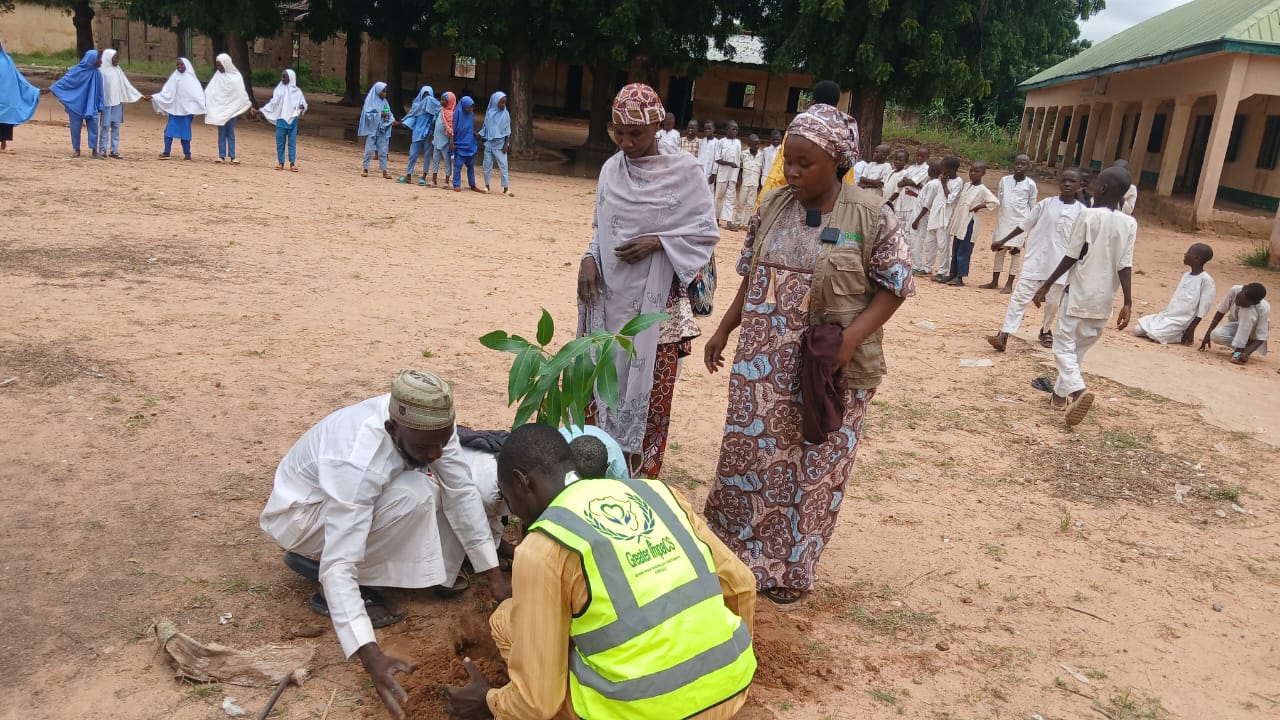
Planting trees. Growing climate-resilient schools.
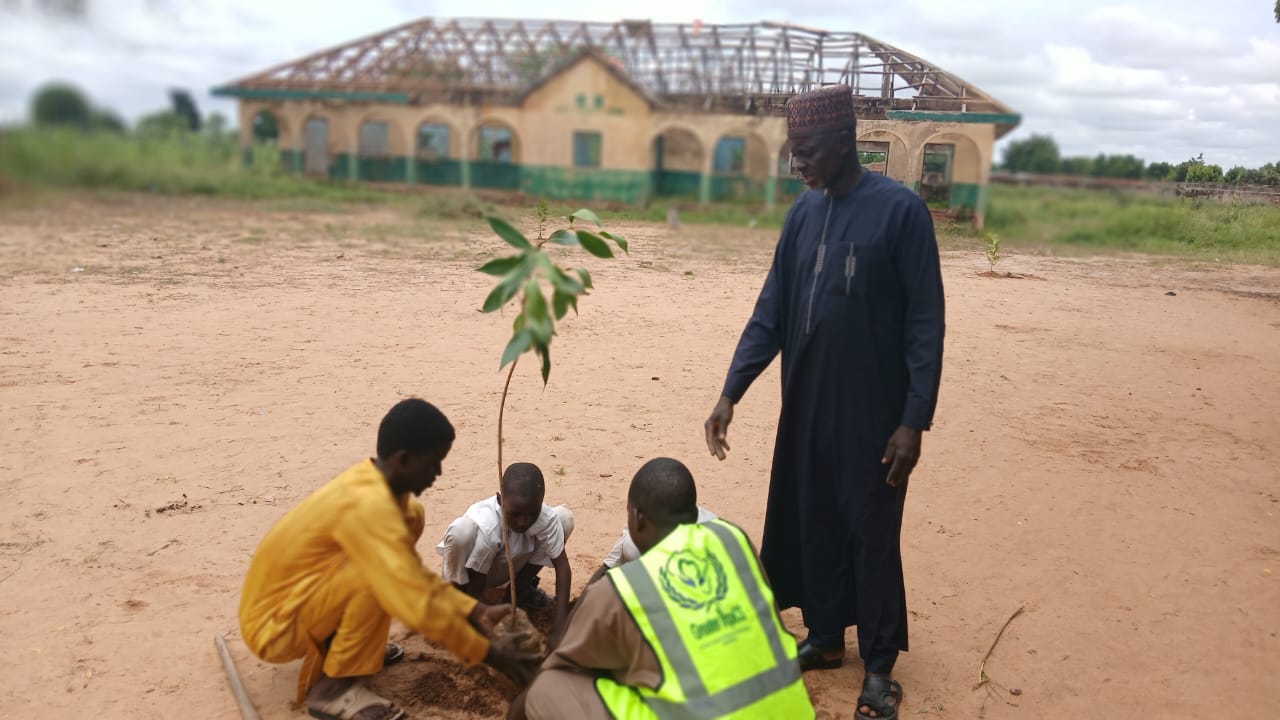
In Nangere LGA, Yobe State, GIMPACS is taking practical climate action in school communities affected by wind-related infrastructure damage. As the trees grow, they can help create greener and more resilient school environments.
What this work connects
- Climate awareness
- Tree planting
- School participation
- Environmental stewardship
- Safer learning spaces
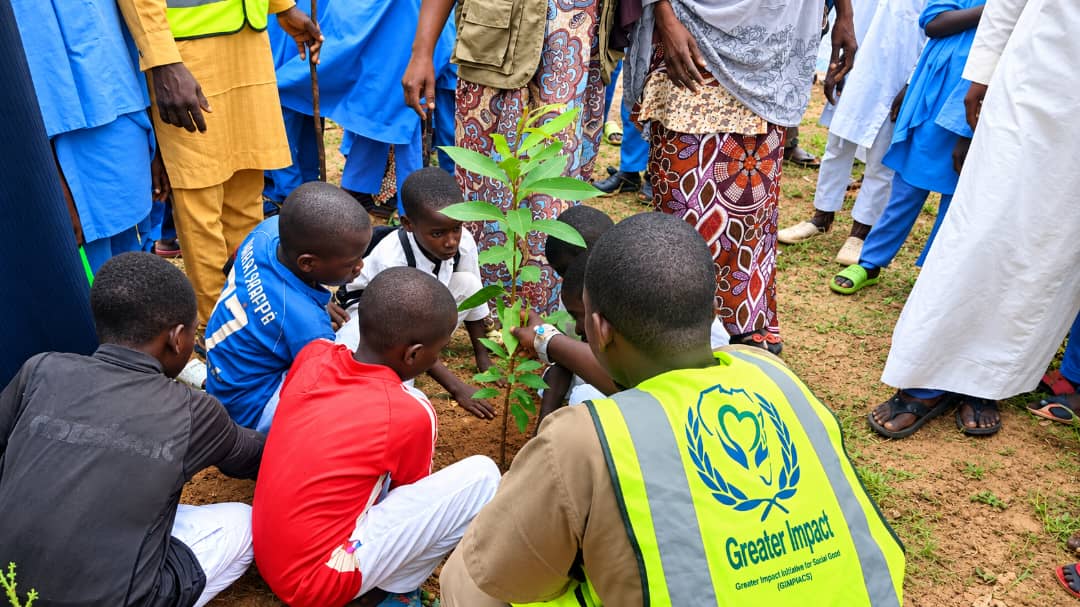
Tree planting and community stewardship
Planting is the beginning of the work. Communities, schools and local partners can help care for trees, monitor their progress and sustain environmental action beyond a single activity.
Services include
- Community mobilisation
- Climate education
- Tree care awareness
- Local coordination
- Learning and feedback
Climate-aware humanitarian services
Climate risks can affect access to health, WASH, education, protection and livelihoods. We aim to bring environmental risk into programme conversations so that support remains relevant to changing conditions.
Areas of connection
- Health and wellbeing
- WASH and hygiene
- Education and protection
- Livelihood resilience
- Community preparedness
What climate action can strengthen on the ground.
Better understanding of climate risks
Children, families and local actors have clearer information about environmental pressures and practical adaptation options.
Greener learning environments
School communities are supported to connect tree planting and environmental care with safer, more resilient spaces for learning.
Stronger community ownership
Local knowledge, shared responsibility and continued care help climate activities remain relevant and sustainable.
More climate-aware programming
Health, WASH, education, protection and livelihood activities can better reflect changing environmental conditions.
Greater attention to people at risk
Climate action considers the needs and participation of women, children, persons with disabilities and displaced communities.
Small actions can support stronger futures.
Resources on Climate Action & Adaptation.
Add verified programme resources here as they become available.
Help communities prepare for a changing climate.
Your support can help communities sustain practical climate action and build safer, greener learning environments.