Connect With Us:
Improving access to quality, equitable, life-saving healthcare for vulnerable and underserved populations across Borno, Adamawa and Yobe. We work with government institutions, community leaders, healthcare providers and humanitarian partners to strengthen health systems and ensure that essential health services reach people affected by conflict, displacement, disease outbreaks, climate shocks and poverty.
Our interventions focus on preventive, curative, rehabilitative and emergency healthcare through integrated community and facility-based approaches. We prioritise early warning signals, outbreak preparedness and response, community health promotion, and integrated community case management for hard to reach communities.
Through these approaches, GIMPACS contributes to healthier, more resilient communities capable of preventing disease and responding effectively to health emergencies.
Select an area, then choose a programme to read its details.
Supporting health facilities and communities with comprehensive primary healthcare services.
Implementing preventive measures that reduce disease transmission.
Responding rapidly to humanitarian emergencies.
GIMPACS prioritises healthcare services for populations facing the greatest health risks and barriers to care.
Improving child survival through integrated healthcare, immunization, disease prevention, nutrition screening and prompt referral.
Maternal healthcare support, antenatal and postnatal care, safe motherhood education, skilled referrals and health promotion.
Awareness campaigns, reproductive health education, mental health support and life-skills education.
Inclusive healthcare through improved accessibility, reduced barriers to services and disability-inclusive programming.
Supporting healthy ageing through routine health screening, chronic disease awareness and referral services.
Emergency and routine healthcare services for displaced populations living in camps and host communities.
Strengthening health systems serving vulnerable host populations affected by humanitarian crises.
Delivering healthcare in fragile and hard-to-reach areas through mobile teams and community-based interventions.
Browse a project to see what it delivers.
Delivering integrated healthcare services to underserved communities through mobile medical teams.

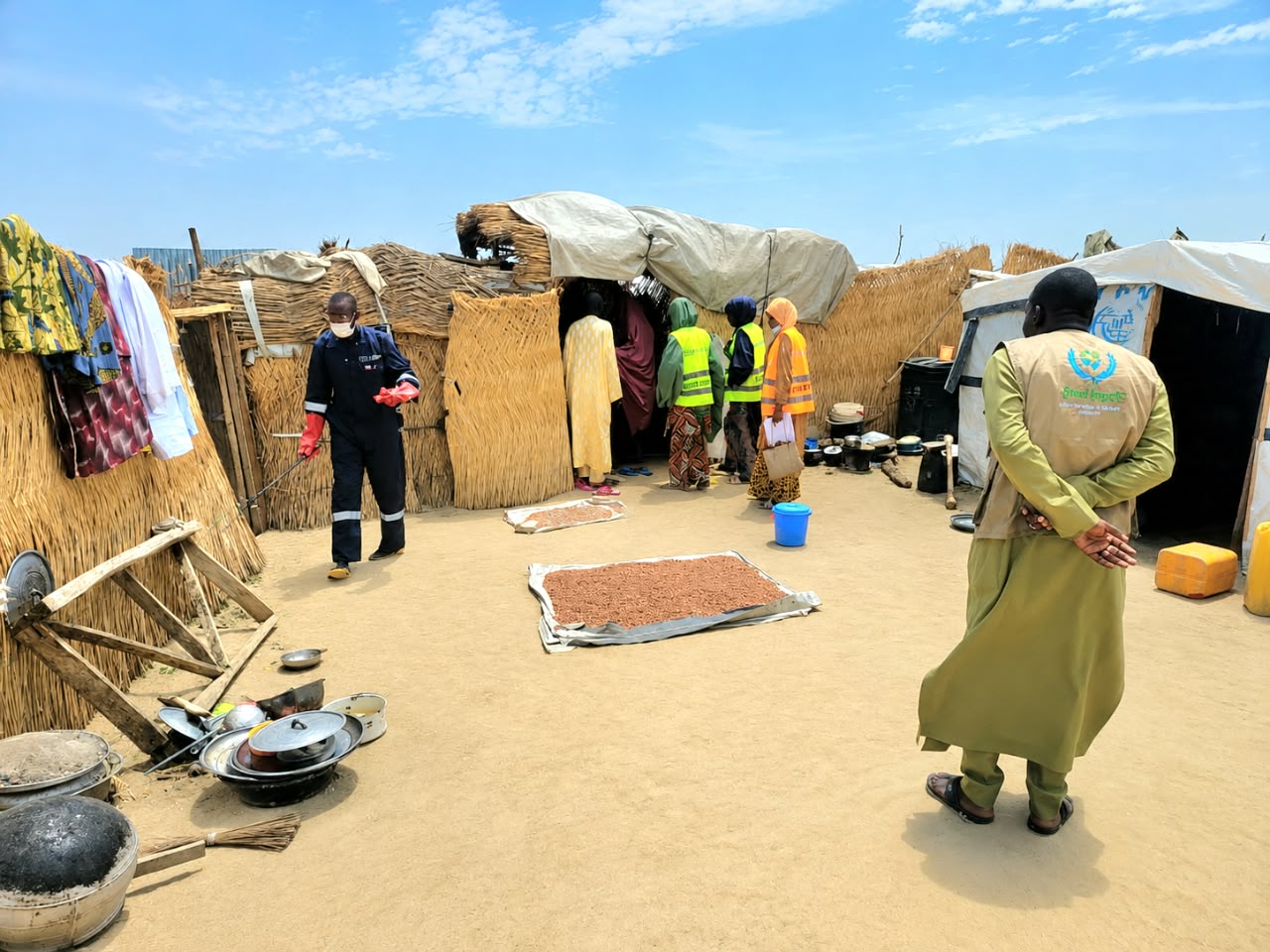
Rapid emergency response supporting communities during cholera outbreaks.
Strengthening early detection and reporting of epidemic-prone diseases through trained community volunteers and health workers.
Supporting mothers and newborns from pregnancy through early childhood.
Building local capacity by training community volunteers.
Expanding services to remote and underserved communities through mobile outreach and strengthened health facilities.
Communities show increased knowledge and adoption of preventive health practices that reduce the spread of communicable diseases.
Community health workers and volunteers are better equipped to identify risks, provide health education and facilitate timely referrals.
Communities benefit from rapid deployment of emergency health teams during disease outbreaks and humanitarian crises.
Pregnant women and children have improved access to care that contributes to healthier pregnancies and improved child survival.
Health workers receive ongoing technical support, mentorship and capacity development to improve quality of care.
Before the mobile clinic started visiting our community, many families travelled long distances to seek medical care. Today, children receive treatment closer to home, pregnant women attend health consultations, and our community is healthier.
When a cholera outbreak affected vulnerable communities, GIMPACS rapidly deployed emergency response teams who conducted health education, supported disease surveillance and coordinated with local health authorities to strengthen community preparedness and response.
Following intensive training, community volunteers now conduct household visits, identify vulnerable individuals and connect families with essential healthcare services — significantly improving early detection and referral of illnesses.
Visitors to this page can access the following resources.
Donors, health authorities and humanitarian partners can reach out to discuss funding, technical partnership or joint programming across Borno, Adamawa and Yobe.

Primary Healthcare
Improving the health, survival and wellbeing of women, newborns, children and adolescents through quality, equitable and integrated primary healthcare.
The Maternal, Newborn, Child and Adolescent Health (MNCAH) programme seeks to improve the health, survival and wellbeing of women, newborns, children and adolescents through strengthened access to and utilisation of quality, equitable and integrated primary healthcare services.
The programme adopts a continuum-of-care approach spanning pregnancy, childbirth, the postnatal period, infancy, childhood and adolescence, with interventions delivered at health-facility and community levels.
Select a stage
Promoting safe motherhood and reducing preventable maternal illness and deaths by improving access to timely, quality and respectful care throughout pregnancy, childbirth and the postnatal period, with early identification of risks and complications, appropriate management and timely referral.
Key intervention areas
The first 28 days of life are a critical period for preventing avoidable newborn deaths and complications. Interventions strengthen essential newborn care, early recognition of danger signs, and appropriate management and timely referral of sick, small and vulnerable newborns.
Key intervention areas
Promoting child survival, healthy growth and development, with particular emphasis on children under five, through integrated preventive, promotive and curative services and stronger community-level identification, management and referral of childhood illnesses.
Key intervention areas
Promoting access to appropriate, confidential and adolescent-responsive health information and services, strengthening adolescents' knowledge, healthy behaviours, care-seeking practices and access to essential health services.
Key intervention areas
Increase the availability, accessibility, utilisation and quality of essential maternal, newborn, child and adolescent health services, particularly among underserved and vulnerable populations.
Strengthen prevention, early identification, appropriate management and timely referral of complications and illnesses affecting women, newborns and children.
Improve knowledge, care-seeking behaviour and adoption of appropriate health practices among women, caregivers, adolescents, families and communities.
Implementation uses an integrated health-system strengthening and community-based approach, in collaboration with government health authorities, health facilities, community structures and development partners, aligned with national and sub-national health policies, guidelines and priorities.
The programme is expected to contribute to increased utilisation and improved quality of essential MNCAH services; earlier identification and referral of maternal, newborn and childhood complications; improved newborn and child survival; strengthened adolescent access to appropriate health services; increased community awareness and care-seeking; and stronger capacity of primary healthcare facilities and community structures to deliver sustainable MNCAH interventions.
Primary Healthcare
Preventing vaccine-preventable and other infectious diseases by reaching underserved communities with quality immunization and disease prevention services.
We work to prevent vaccine-preventable and other infectious diseases by strengthening access to quality immunization and essential disease prevention services. Our interventions focus on reaching underserved and hard-to-reach communities, improving vaccination coverage, promoting early detection and strengthening community participation in disease prevention and control.
Through collaboration with health authorities, healthcare providers and community structures, we support stronger primary healthcare systems and promote sustainable approaches to disease prevention and public health protection.
Supporting equitable access to routine immunization and improving vaccination uptake, with particular attention to children who are underserved or have limited access to health services.
Identifying children who have never received routine vaccines or have missed doses, and strengthening community and facility linkages so they are reached.
Prevention, early identification, management and referral of priority communicable diseases, including malaria, tuberculosis, HIV and other infectious diseases.
Strengthening community awareness and early identification and reporting of suspected diseases for timely investigation, referral and response.
Working with communities, health workers, local leaders and influencers to promote vaccination, healthy behaviours and appropriate care-seeking.
Strengthening preparedness, early detection and coordinated response to disease outbreaks and other public health threats.
Improve access to and use of routine and supplementary immunization services, particularly among zero-dose, under-immunized and underserved populations.
Strengthen disease prevention, early detection, referral and appropriate management of priority communicable and vaccine-preventable diseases.
Improve community knowledge, vaccination acceptance, early care-seeking and participation in surveillance, prevention and response.
We work with government health authorities, healthcare providers, community leaders, community health workers and other partners to:
Our interventions contribute to increased immunization coverage, reduced numbers of zero-dose and under-immunized children, stronger disease surveillance and response, improved community awareness, and a reduced burden of preventable diseases.
Ultimately, we aim to contribute to healthier communities and stronger primary healthcare systems capable of preventing, detecting and responding effectively to public health threats.
Emergency Response
Timely, accessible and quality healthcare during emergencies, from rapid assessment through triage, treatment and referral.
We support the delivery of timely, accessible and quality healthcare services during emergencies and humanitarian crises. Our interventions address immediate health needs while supporting the continuity of essential services for populations affected by conflict, displacement, disease outbreaks, natural disasters and other emergencies — working with health authorities, healthcare providers, communities and humanitarian partners to ensure affected populations can access appropriate care when and where they need it.
Rapid assessment of health needs, risks and service gaps to inform timely and appropriate emergency health interventions.
Essential primary healthcare during emergencies, including clinical consultation, treatment, basic care and referral.
Strengthening providers' capacity to rapidly assess, prioritise and manage patients according to severity and urgency.
Continuing critical services, including maternal and child health, immunization and communicable disease services.
Strengthening referral pathways between communities, primary healthcare facilities and higher-level facilities.
Helping facilities stay operationally ready through staffing, essential medicines, supplies and equipment.
Emergency Response
Preparedness, early detection and coordinated response to disease outbreaks and public health threats.
We support communities and health systems to prevent, detect and respond rapidly to disease outbreaks and public health threats. Our interventions strengthen preparedness, early detection, coordination and response mechanisms to minimise transmission, protect communities and reduce illness and deaths — working with government health authorities, health facilities, communities and partners so that responses are timely, coordinated and guided by evidence.
Strengthening preparedness plans, response capacity, coordination mechanisms and essential resources.
Early identification, notification, investigation and response to suspected outbreaks and priority diseases.
Helping frontline health workers and community structures recognise suspected cases and refer them quickly.
Measures that reduce the risk of transmission within health facilities and communities during outbreaks.
Timely, accurate information to promote protective behaviours and address misinformation.
Coordination among health authorities, facilities, communities and humanitarian partners.
Emergency Response
Safe healthcare environments that protect patients, healthcare workers, caregivers and communities from avoidable infection.
We support health facilities and communities to strengthen infection prevention and control practices that protect patients, healthcare workers, caregivers and communities from avoidable infections — promoting safe healthcare environments and strengthening the capacity of health workers and facilities to apply appropriate IPC standards across routine services, emergencies and disease outbreaks.
Building healthcare workers' knowledge and practical skills in standard and transmission-based IPC measures.
Effective hand hygiene, appropriate use of personal protective measures and standard precautions.
Appropriate cleaning, disinfection and maintenance of healthcare environments to minimise infection risks.
Safe segregation, handling, transportation and disposal of healthcare waste.
Helping facilities identify infection risks and put measures in place to reduce transmission.
IPC measures and readiness during outbreaks, humanitarian emergencies and other public health events.
Emergency Response
Trusted, two-way communication that keeps communities informed, engaged and confident in the response.
Effective emergency response depends on informed, engaged and trusted communities. We work with affected populations and local structures to provide timely, accurate and culturally appropriate health information before, during and after emergencies — promoting community participation, building trust, addressing misinformation, and supporting people to adopt protective behaviours and access essential health services.
Clear, timely and accessible information on health risks, protective measures, available services and response activities.
Working with community leaders, health workers, volunteers, women's and youth groups and other local structures.
Context-specific approaches that encourage protective behaviours and appropriate use of health services.
Identifying and addressing misinformation, misconceptions and concerns affecting health-seeking behaviour.
Mechanisms for communities to give feedback, raise concerns and shape service improvements.
Targeted outreach to vulnerable, underserved and hard-to-reach populations.
Emergency Response
Timely, accurate health information that guides preparedness, response and evidence-informed decision-making.
We support the use of timely, accurate and actionable health information to guide emergency preparedness, response and decision-making — strengthening surveillance, rapid health assessments, reporting and analysis to identify emerging health threats and changing needs among affected populations, working with health authorities, facilities, communities and response partners.
Rapid assessments of population health needs, service availability, risks and critical gaps.
Timely identification, notification and reporting of suspected diseases and unusual health events.
Helping facilities and response teams collect, manage and report reliable information using established systems.
Analysing and interpreting health information to identify trends, risks and priority response needs.
Organising, managing and sharing health information to improve coordination and decisions.
Monitoring interventions, service use, coverage and performance to inform timely corrective action.
Primary Healthcare
Bringing health information and support to households through trained community health volunteers and health workers.
We build local capacity by training community volunteers who visit households, identify vulnerable individuals and connect families with essential healthcare services. Alongside health education campaigns, this work increases community awareness and adoption of healthy behaviours and improves early detection and referral of illness.
What this includes
Primary Healthcare
Early detection and reporting of epidemic-prone diseases through trained community volunteers and health workers.
We strengthen community awareness and the early identification and reporting of suspected diseases, so that cases can be investigated, referred and responded to quickly. Trained community volunteers and health workers act as the first line of detection for epidemic-prone diseases.
What this includes
Primary Healthcare
Consultation, treatment and referral for common illnesses, at supported facilities and through mobile medical teams.
Our outpatient services bring essential curative care closer to underserved communities, through supported health facilities and mobile medical teams that reach populations with limited access to health facilities.
What this includes
Disease Prevention and Control
Reducing malaria and other vector-borne diseases in the communities we serve.
Vector control is part of our wider work to reduce the transmission of communicable diseases, with a focus on malaria prevention. We combine community health education with early identification and referral so that illness is prevented where possible and treated promptly where it occurs.
What this includes
Disease Prevention and Control
Protecting communities from cholera and other waterborne diseases through safe water, hygiene and rapid response.
We work to prevent the spread of cholera and other waterborne diseases, and respond rapidly when outbreaks occur. Our response teams combine water quality monitoring and treatment with hygiene promotion and community sensitisation, coordinating with local health authorities throughout.
What this includes
No. 2 Old Range Road, off Muhammadu Indimi way, Maiduguri, Borno State
© 2026 Greater Impact Initiative for Child Support (GIMPACS). All rights reserved.